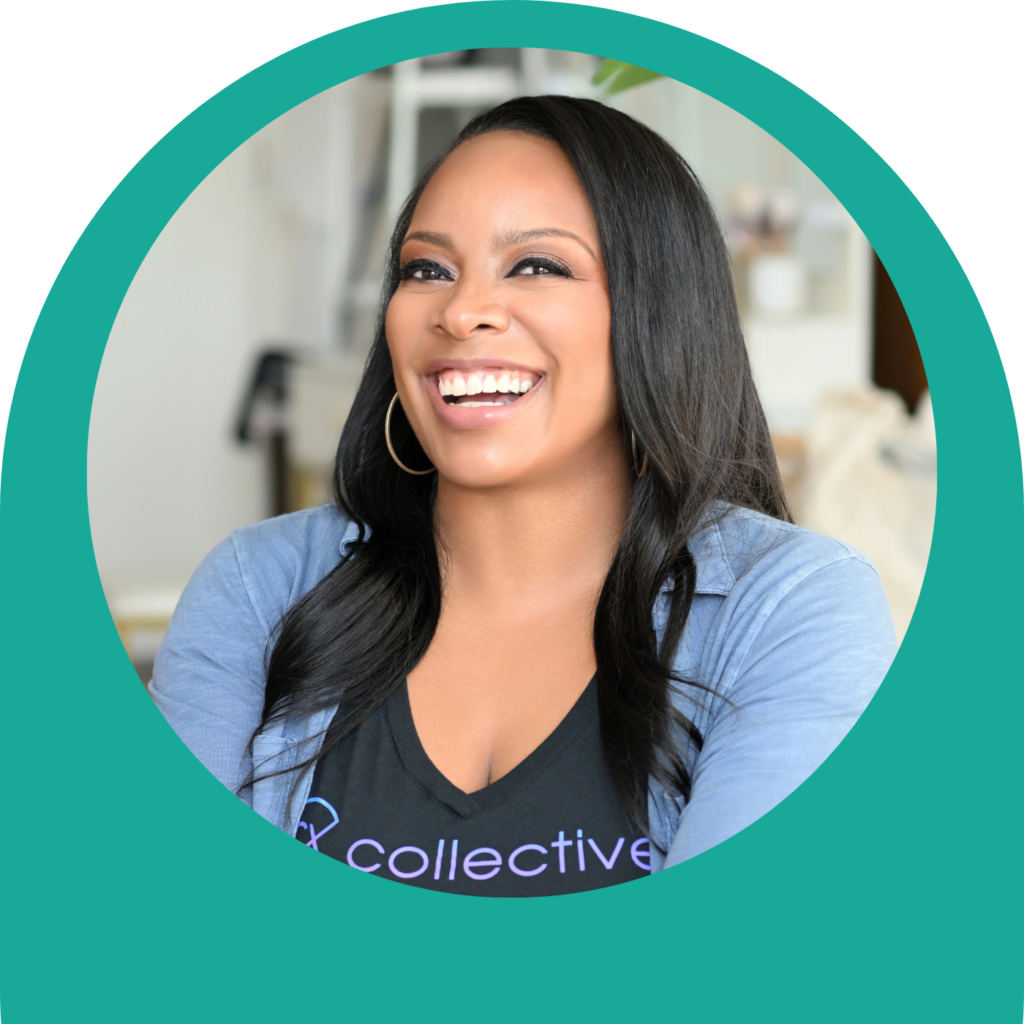
Priscilla McKinney:
Well, it’s my show and I can do whatever I want. And I hadn’t spoken with Jim Jacobs for a while. And so I asked him to come on my show and you were going to love this episode so much because I don’t know if you’ve noticed, but I have really great friends in this industry. But if you don’t know Jim Jacobs, he is the CEO and founder of Focus Insite.
Interestingly enough, I’d like to just tell a little bit of his greatness, but he has been a two time Inc. 5,000 qualitative recruitment firm. And I, you know, that’s just a little something that feels good as a fellow entrepreneur. But I asked him on today because he’s also created something very interesting and it’s very relevant to our digital transformation success podcast. And that is Human Layer. It’s a platform that sources ethically licensed human audio for AI model training.
So you’re going to hear from a real expert. He’s a leader in AI. He’s an entrepreneur and a member of EO. So if you’re ever interested about that, then give a shout out and talk with him about that. But he’s just a candid speaker and he’s always willing to share his expertise. So Jim, welcome to my show.
Jim Jacobs:
Thank you so much, Priscilla. I love the intro and it’s an absolute pleasure to be on. So thank you for having me.
Priscilla McKinney:
You know, AI is one of those things that everybody is just like, feels so worried about, but it’s, you know, nothing new in that we’ve been constantly digitally transforming our workforce, our work. I mean, you think about, okay, yeah, as far back as the computers, but even with a lot of software, think about the whole SaaS era that we all lived through and we all survived. We’ve been constantly bringing our teams through digital transformation.
And so in my opinion, and I’m sure you feel this way too, AI is just the next thing that we’re helping our teams work through. Is that how you feel?
Jim Jacobs:
You know, it’s the biggest thing I’ve seen, but you have to know how to operate it. And you know, it’s funny because I have everything from my open claw installed over there. I have manas, I have Claude cowork. I have chat GPT and it’s kind of wild. It’s almost like you have a few different employees or siblings who are fighting with each other because I’ll get an answer from chat GPT and then I’ll put it.
Well, I think Claude will say, my God, that’s wrong. They don’t know what they’re talking about. So I get the AI arguing with each other. I’m like, oh my goodness gracious.
Priscilla McKinney:
Well, you use a lot of the same products I do, love me some Claude. I love Claude to death. But let’s kind of back up to what your world is first before we get into some of that AI, just for folks who don’t live in the world of qualitative research. Can you paint a picture for them of what it actually takes to find the right respondents? Like the real difficulty of finding that proverbial needle in a haystack. And then we can talk a little bit about enter AI and what’s changed a little bit.
Jim Jacobs:
Well, you know, it’s funny, my background in this, my investigative reporting background. Previous to this I had a commercial real estate brokerage business and was a pretty successful business in the fact that I could really broker and put together big deals and what happened was you would work on these large deals for large sums of money and people wouldn’t want to pay at the end and hide behind an LLC or hide behind this, so you really had to do a lot of investigating and go behind records and figure out who was who.
Little did I know what a phenomenal intro that would be to qualitative recruitment and really verifying who these people are, what their backgrounds are, multiple ways of verification. So in terms of finding the qualitative respondents, I mean, there’s so many ways you can do it. I mean everything from a reddit board to obviously LinkedIn to different directories to different NPI numbers if they’re a medical professional.
So many different ways to find these needles in a haystack and we’ve been doing it for a decade now. But man we get some crazy ones on, you know, how to get them and how to qualify them and you know you really have to be up on your game, not just in terms of social media, in terms of internet presence, in terms of AI, and that’s what I have to thank you for because you were really one of the leaders in marketing and at the forefront.
And, you know, remember when LinkedIn came out, right? As do probably you, and now I’m on the thing every day, you know, and it was like you kind of didn’t use it. And I really didn’t use it that much until I attended one of your courses and I said, listen, you speak. I said, my God, I’m leaving this huge opportunity. And now everyone, it’s funny. People come up to me and I’ll see them in a restaurant and I’m like, hey, I really like your LinkedIn post you did this week. So I owe you dinner next time you’re in town.
Priscilla McKinney:
I love it. You know, I’m going to take you up on that. I hope I get it. I hope I get a cocktail with a dinner, though, Jim. Can I have that?
Jim Jacobs:
Come to Philadelphia. All your listeners hit me up. That’s always fun. I am right by City Hall. So absolutely.
Priscilla McKinney:
I love it. Okay. So this is what you’ve been doing, finding these people and really verifying them, making sure that when people are responding that we know who they are. We verified that they have the expertise or the experience that we’re looking for in order for them to answer these questions in order to get the right data to make the next best marketing decision for your clients. So walk us through a little bit how AI has changed your sourcing and your screening process for respondents and why did you create Human Layer?
Jim Jacobs:
Yeah. In terms of the sourcing for respondents, we still have human in the loop because having a person screened by AI, that’s great and all, but I really still think it’s at the beginning where I don’t have to tell you about a woman’s intuition. I call it my spidey sense. And you get your spidey sense when something isn’t right. And AI does not have that. So you need a human in the loop.
So what we’ve done is we’ve kind of trained our staff into, if it doesn’t look right, doesn’t feel right, it’s probably not right. And you know, people are hiring us and paying us to get qualified respondents. That being said, there are ways to trick AI. I posted something the other day where AI hallucinates and that is what we see the big opportunity for humans in the loop.
AI needs to be trained. As a matter of fact, there is a big push with the European Union starting in August about all AIs must be documented, to have stop gaps and trained by humans. So we’re the human layer, right? You need to talk to oncologists. I mean AI is getting dangerous. It’s getting dangerous where people are going there for medical. I mean it’s phenomenal. I use it every hour of every day. There’s no question. I can’t believe the amazing technology we have but it’s not right all the time.
And you know there is synthetic data which is based on real humans. As a matter of fact, I saw Eileen Diskin a couple of weeks ago. She’s the chief marketing officer of Comcast and being in Philadelphia, I got a chance to listen to her speak and you know, this is one of the biggest fortune 500 companies. And she even said, I’ll never use synthetic data. I will rely on humans every step of the way. And they were running 14 focus groups in a week.
Priscilla McKinney:
Wow, wow. Yeah, that’s interesting coming from her perspective. So let me ask you this because there’s a lot of different AI tools out there. You and I have mentioned several here, but within our market research space, what we call the res tech, there are a lot of other AI tools there. What is different that you’ve done over at Focus Insite? What is this piece that you’re talking about with actual voice, human audio, and AI model training? This is so intriguing to me.
Jim Jacobs:
Yeah, it’s really neat. I did a project for, and I don’t think I could say who the client was, but it was a fortune 500 company you would know if I told you, and it was a two year long project and it was essentially getting people all creeds, all ages, all colors, all ethnicities for car sampling essentially. And what’s neat about the other LLM training, large language model training, there’s even small language model training where they want really specific experts for a certain niche.
But imagine if I said, hey Priscilla, you’re doing open mic tonight for your comedy show. Awesome. Go break a leg. Well AI might not understand the idiom, the syntax. And for example, we just had to do this where we recruited people in Europe, in Ireland, and they wanted people with Irish accents for a language study because they want to hear what the syntax is and everything.
So there’s lots to do in the large language model and the AI space. It’s all based on humans. And yes, it definitely decreases the amount of labor you need, but you need someone who knows to run it and see the potholes for sure.
Priscilla McKinney:
So how are you integrating that audio in to verify respondents? And maybe this is proprietary and you can’t tell me that exactly, but it is very intriguing to me.
Jim Jacobs:
Yeah, in terms of the audio, we’re recording different audio, different samples and that’s used to essentially train AI and that’s something you need to produce new. You can’t go, for example, you know what the largest podcaster out there is, is Joe Rogan and he’s got a couple hundred thousand hours of podcasts, but they’re all copyrighted. You can’t use them yet.
People need to be AI trained. It’s something you need. It’s called the golden data set. So what that is, is humans who agree to have their voice and image trained for AI and you need those waivers beforehand and you need those recordings to be done from scratch.
Priscilla McKinney:
So interesting. Okay, so let me back up a little bit about your entrepreneur journey. This is where you and I, we find ourselves at different conferences and a little bit of the backside, maybe kind of having interesting conversations. What I always refer to as the stunning discomfort of entrepreneurship. It’s always hard to direct a team and to anticipate market trends and to stay on top of technology as we’re talking about today.
But when you think about the next thing you want to roll out, whether it’s AI or any kind of technology, and you really want to have success with your team, what are the things that are going through your mind as an experienced entrepreneur? What’s the framework you’re using or questions you’re asking yourself so that you can make that call and really make the next transformation of success?
Jim Jacobs:
Well, what I love about our business. We have a painful business. There are some pains in that business, right? And what’s the biggest pain people have? Oh my God. The respondent didn’t show up. Oh my God. They weren’t qualified. Right. So there’s some pain herding cats. You know, I have this master’s degree in this and I’m chasing around people trying to get, make sure they’re on a study and their microphone doesn’t work and their computer doesn’t work. There are some painful things.
So Focus Insite, when we set out, how can we solve that pain? And I think that’s everything I look for. Number one, what pain can you solve? And number two, after you solve that, how big is the addressable market and how big could this thing get? So that’s the way I always look at it. And I’m always like, well, if I had this pain, someone else probably had this pain. And if I had this pain and they had this pain and someone else had this pain, then to me, that makes a lot of sense that maybe this is something that we could build and scale and come up with a process.
One of my best friends who I was in an entrepreneur group with, he said, you know, take the thing that no one wants to do and everyone hates doing and develop a system and process and build around that and you’ll be golden. So that’s kind of what I did. Ever since then, that’s kind of what I’ve done with different businesses and different ventures and try to jump in the blue ocean rather than the red ocean.
Priscilla McKinney:
Well, it kind of sounds simple, but actually so many people are following the trend or following the technology running first after the technology. Well, let me see what this can do for me. But what you’re saying is, let me go to my team and say, oh gosh, what is driving you bunkers? Let’s solve that. And also you get so much more buy-in from your team, I’m sure.
Jim Jacobs:
100% and you know, I think you hit the nail on the head Priscilla. Especially today with AI, a lot of these software as a service products, they can be replicated pretty easily, within a couple weeks. So you know, I think you always got to keep in mind what is the problem you’re trying to solve and just solve that better than anyone.
And we’ve been able to do a pretty good job with that with the respondent problem and the people problem. And you know there’s lots of stuff that we had to learn along the way, like people don’t want checks, they want gift cards and they want them emailed. And people want to be texted but you can’t just cold text them, you got to make sure they approve. So there’s lots of little things where if you try to replicate the business, you have kind of a moat there because you have to develop trust. And I remember when we started this business people would ask, is this a scam? Am I going to get paid? And then after they get the first check, oh my God, I want to do 100 of these. It’s kind of amazing the way it yo-yos.
Priscilla McKinney:
Yeah. Well, you’ve been through a very long digital transformation journey. I remember coming into this industry into market research maybe 12, 14 years ago. And I mean, there was almost no tech. People were thinking what’s next? We’ve already gone to mobile phones. We’ve already gone to mobile surveys. There’s nothing next, which is a ridiculous approach.
But I just love hearing your story. Listen, if you’re listening right now and you’re kind of curious what your next step is, Jim’s one of those guys you can reach out to on LinkedIn and he actually answers. I know that for a fact. But also, he mentioned to me before that he’s been in EO with the entrepreneurs organization for quite a long time. And if you do have questions about that, he’s a great resource too.
But Jim, just for being so nice and coming on my show when I ask you to and sharing this experience, so people just don’t feel quite so alone. Tell me a little bit about Focus Insite. Give my audience just a quick look. If you’re sick and tired of this, why would you call Jim? Who’s the perfect person to be calling you right now?
Jim Jacobs:
Sure. Entrepreneurship can be very, very lonely, you know, and that’s what’s good about Entrepreneurs Organization or reaching out to me. Imagine the Tinder for entrepreneurs. If you have a question, a problem, come reach out. And you know, I mean, you get two things on a deal. You get money or you get experience and I have a lot of experience because when you get a lot of experience, that’s how you get the money. It’s not the other way around. So I love to share and help anyone.
But in terms of the problem we solved for Focus Insite, we have a vetted database of respondents for all your studies, B2B, consumer, medical. Reach out to us at Focus Insite, tell us what you need. We just did a study, this is pretty neat, we got the study at four o’clock, they needed it done by the next day, they needed 25 people and it was a ride share type of study and we recruited the thing in three hours.
And had everything done by the next day. We were able to get that done. We didn’t know how we were going to get it done. And there’s a lot of studies where we’re like, we don’t know how we’re going to do it, but we’ll figure it out. And that’s been kind of a calling card, we always figure it out, even if it’s out of the box. Which seems to be now the standard, not the normal thing.
Priscilla McKinney:
Absolutely, absolutely. Well, if you’re looking to field a qualitative study, then make sure you give Jim a call or for any of the other things. But you know, the nice dinner and cocktails, that’s just you and me. Awesome. Thank you for being such an amazing colleague for so many years. And from anybody who wants to reach out to you, this is going to be a good time. Thanks for sharing your story.
Jim Jacobs:
No problem. Like I said, anytime, Priscilla, anytime. Thanks for having me on, it was an absolute pleasure.