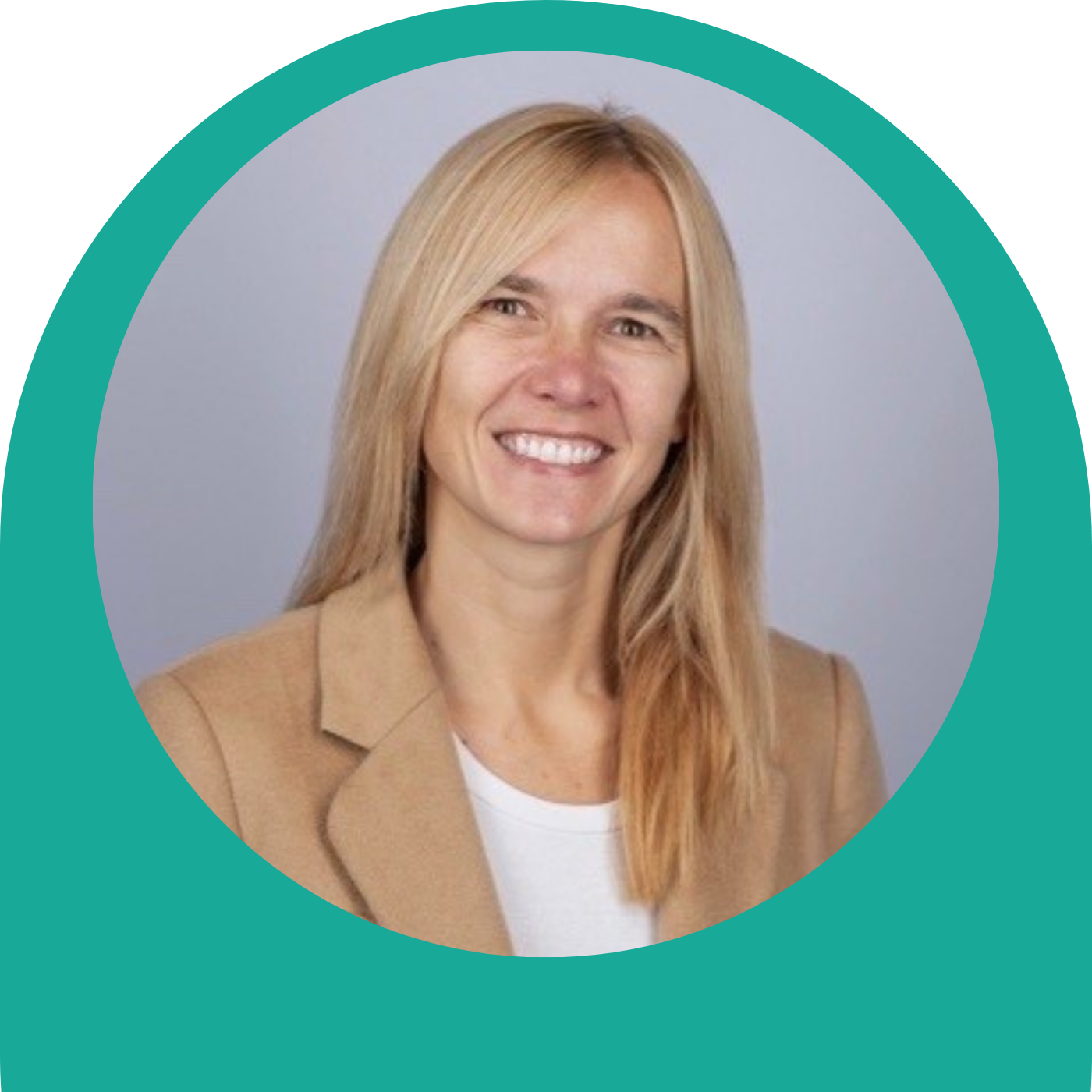
Priscilla McKinney: I am so lucky to be connected through amazing experts in this industry. And I found a new friend and Alena Rossini is gonna give you such a great view of growth strategy. And I know that first you’re thinking, wait a minute Priscilla, we like talking about digital transformation success and we like talking about technology. And as always on the show, I say, wait a minute.
It’s not the technology, it’s the people, it’s the experts who bring it all together. So I have a special guest with me today, Alena, welcome to the show.
Alena Rossini: Thank you so much, Priscilla. I’m so excited to be here. As you can imagine, digital transformation is a hot topic for any growth strategist. So I’m hoping that we’re going to have a really good debate today.
Priscilla McKinney: Awesome, well let’s have everybody understand where the context is for today’s talk. Alena is a growth strategist at Tesco Retail Media. So tell everybody what your day-to-day is so they understand kind of where you sit in the ecosystem and who you help and what are the typical challenges you’re facing.
Alena Rossini: I must say I have a really interesting and exciting role. there are many people that have a strategy in their title, but my strategy is really focusing on where do we take the business. Retail media as an industry is relatively nascent in our market. And my role is really to start thinking about how will the industry evolve and what will be our role within that industry in the mid to long term. on daily basis, I go anywhere from understanding market trends, to understanding our clients and their nature, to understanding our technological capabilities and really thinking about what will set us for success in the short, mid and long term.
Priscilla McKinney: Day in and day out, who are you talking to? Is it the CMO? Is it a CTO? Help us understand those conversations.
Alena Rossini: Very interesting question. obviously our key clients are media buyers, be it agencies or direct brands. But within that, the spectrum of buyers have really evolved over time as the industry, as the marketing industry, evolved itself. So part of our focus and my focus is understanding the demand side and the client base and how their needs are shaping.
But part of my role is also to understanding the technological landscape and really thinking how technology can enable our business to move forward in what is very complex environment.
Priscilla McKinney: Yeah, yeah, people talk about digital marketing and I’m like, why are we calling it digital marketing? It’s just marketing, but yes, it’s all digital. So kind of help me understand, you you have almost three decades of experience in this and you have certainly seen massive technological changes in media. So help us kind of understand how you frame that, you know, when someone comes to you and says, well, digital marketing, what’s your first thought?
Alena Rossini: Well, my first thought is that if you are a CMO or if you are a leader in an agency or a leader in a publisher, you have a really challenging role because you’re navigating an environment that is not only complex, but it’s changing really fast and knowing where to put your bets, it can be really difficult. I always say understanding what options you have and making sure that you are building for scenarios rather than having a rigid plan is really key in this environment.
The second part of this is, you know, we talk about digital transformation and quite quickly we always go to the technology part. I say you need to make sure that your business is ready for the technology to be deployed because otherwise you are wasting a precious both investment from a money perspective but also time because if your teams are not understanding what transformation you are bringing forward chances are it’s going to fail.
Priscilla McKinney: Yeah, I love that. And I kind of think of digital marketing like that phrase, everything, everywhere, all at once. It just feels like it’s so stressful. How many channels do we have? How many approaches? How many different audiences? And it can be very overwhelming. So in your experience, how do we kind of take a step back from that very fast paced changing media landscape and really make sure that we’ve built a robust strategy that lasts, as you say, being able to be flexible and think more on scenarios, less on exacting. How do you do that?
Alena Rossini: I think a good leader recognizes what is changing, but also recognizes very clearly what remains the same. And there are some very core principles that hold true regardless of what’s happening in the ecosystem. So it is true that there is more fragmentation in terms of channels and therefore it’s more difficult to reach people. But at the same time, if you are very clear about what your brand stands for, what need it answers and have the right ways of communicate that proposition, then your job is half done.
I always say if you build strong foundations, if you have a strong foundation, you can build really high. What is very tempting nowadays, especially with the shorter cycle of CMOs in place is to keep changing, keep changing what you stand for, keep changing who you’re targeting and keep changing what you’re targeting them with. And that just creates massive inefficiencies.
You need to see technology and technological transformation as an enabler of your overall strong, steady, consistent foundations. Because if you do have strong foundations, then it’s about using the technology to be able to personalize build faster, create at scale more effectively and more efficiently. So the technology becomes an enabler rather than the answer to your current challenges.
Priscilla McKinney: Yeah, and to me that’s like looking at your strategy and then getting sales and marketing alignment but working from the strategy first. Yeah, yeah. Okay, let’s talk a little bit about this smart marketing because to your point, I think it is a lot of a pain point what you mentioned that CMOs now are moving pretty fast and it’s not just that their role internally in places is moving pretty fast but CMOs are moving to other jobs pretty fast.
We’ve seen that turnover, that churn rate, it I think it’s down to like 18 months or two years where a CMO lasts. Do you think any of that has to do with some of this pressure from technology or what I mean what are your thoughts about that?
Alena Rossini: Yeah, absolutely. mean, we have seen the tension between CMOs and CIOs and CTOs and now CAIOs. Obviously, technology has grasped or kind of taken a bigger precedence, especially in the service-based organisations. I think I’m hoping that we are going to see a phase of resurrection. We’ve seen as marketing has become very performance driven and very short term about the next quarter performance, we have lost a little bit of sight of long term brand building.
And I think there is going to be a little kind of a renaissance of brand coming back because people are starting to understand that short termism might get you a little bit better investor call on one quarter, but not certainly bring the shared hold values over longer term. And with that, I’m hoping that CMOs will come to have a little bit more tenure and a little bit more power again as well.
I think why we have seen the shift towards CTOs and CIOs has been really driven by the technological wave that came through, but also the center of gravity when it comes to data. Data were brought into organizations and organizations wanted to be data driven, but in order to enable the data to be democratized and utilized in the right way, technology came at the forefront.
Now the technologies are shifting more towards either CX or creative productization. And with that, again, the question around what are we going to be doing with the technology is coming back to CMO. So hopefully we will see more leading back to the marketing space rather than technology space where it was now. Depends what happens with AI though.
Priscilla McKinney: Right. And that’s changing every day. So let’s come back to something you said, because I think it’s very important. want to underscore the idea of, yes, there’s a lot of new technology. But the things about brands, the thing about really good growth strategies haven’t changed. These principles are still the same. And so one of those things you mentioned is brand building.
And I love, I haven’t heard from anybody this yet, this idea that there’s gonna be a renaissance with brand building. Tell me more about that thought. I’m very intrigued at that.
Alena Rossini: I think if you look at where media spend is going in general, we have kind of had different phases and waves. Obviously social media has been one of the latest, but we are going full circle to having short and long form videos coming to a forefront. And part of that is because people are starting to understand that they need to engage, engage in a meaningful way, engage with culture and engage with emotion.
And they are doing it not just because they want to cut through the clutter, but more importantly, because they know that that will deliver a longer impression with consumers. there is, as there is a rise of data, there is a rise of understanding and there is more evidence again coming back to for that. Yes, you can get a really good return on your advertising spend with a lower funnel performance type of media, but that is not sustainable.
And brand is the only way that you can really truly build a long-term demand. So I’m hopeful that’s where we see most most of brands heading to.
Priscilla McKinney: That makes me think of a conversation I had with another amazing colleague, Alex Millett and the team over at BrandTrust. And they definitely are underscoring exactly what you’re saying, that there is this even non-conscious connection that consumers have to your brand. And you need to understand that fully so that you can create a growth strategy that will last.
And I think they would completely agree about this brand resurgence. So I’m going to have to put the two of you together. But I love this idea of what you’re saying is this performance marketing came in and it has really put the screws to a lot of roles and said, hey, you have to produce this data and you work a lot in insight. So you understand what it means to go get the data and get it proven.
But to your point, there’s something also elusive that is happening that to really drive an effective growth strategy for a brand, you have to truly understand the whole picture and not just get completely tied up on technology. So I want to come back to that point you made a little while ago about your scope of work often is to come in and help businesses be ready for the technology. So tell me about that because we got on on different tangent, but I didn’t want to leave that hanging there because I think that’s such an interesting piece of your expertise and the work that you do.
Alena Rossini: I think for any transformation you really need to understand where you are at in terms of your people and your processes because the technology will only underpin those or enable and unlock them. So I always say when you look at your strategy and any transformations that come with a kind of a long-term vision, you need to start with what is the transformation that I need to do from a mindset perspective of people.
How do I bring them on a journey with me? Really getting people to understand what the end game or at least kind of midpoint game is so that they can understand how the journey is going to be because otherwise they will just be waiting for some magical tool to drop on their laps and think I’ll wake up tomorrow and everything will be smooth.
So people’s mindset and bringing them on a journey with you is critical. And with that, processes. Because mindset is one part, but behavior is the second. And unless you set up the right behavior through processes, again, chances of success are significantly reduced.
Priscilla McKinney: Okay, so let’s kind of put that together and help you understand in your role what is success. You are at the end of the year and your boss is saying, did you accomplish this Alena? What is it that you have to deliver?
Alena Rossini: So obviously success in our organisations always come through revenue, but my personal reflection on success and how I define it with my bosses is I need to ensure that if I meet someone on the stairs and I ask them what our strategy is, they are able to answer me and they are able to answer me in a single sentence. If they take longer or they waffle, we’ve failed.
I think strategy. Don’t get me wrong, strategy documents are quite robust, sometimes quite extensive documents, but the true success of strategy is when it’s translated and deployed in a way that is very easy to understand and is repeatable by people that will deploy and use the strategy to make the right choices. So I always say the easiest way to describe strategy is kind of if you don’t know where you’re going, chances are you’re going to get lost.
Strategy gives you that direction. But good strategy is about making sure that people know where they’re going and then using that goal as something that helps them in a daily life to be clear about trade-offs. Because good strategy tells you what you should be doing and therefore what you shouldn’t be doing. If you have a strategy that a business follows, each and every function lead or even a client or a team lead will be in a position where they go, you know, I need to get more clients.
I can get them this way or I can get them this way, which is a line to where we want to be going as a business. That’s really what my job is on a daily basis, making sure people know where we’re going and making sure that they have the tools to make a trade-off.
Priscilla McKinney: two things I heard in that. Number one is that you need it to be concise. No, no. And everything I hear you saying without saying is that it’s the. One of the things I hear you saying without saying is that it is the job of the leader to make sure that we have communicated this and that so many things that will come at us, everything, everywhere, all at once, that it doesn’t keep our team from understanding what the real goal is.
And I think that’s where a lot of people have gotten thrown, either from, you mentioned technology, but also this really changing fickleness from the consumer this day and age and how easy it is for them to change loyalties and so you know retail media managers have been you know beset with this this horrible challenge and so it is easy to get distracted it is easy to get off course and I love that coming back are we as a leadership aligned are we as a leadership communicating this continually without giving up so much so that people can very quickly and concisely answer to us and reiterate what that strategy is. I love that.
Okay, I’ve saved the craziest thing to last. And for those of you who don’t want to hear about AI, just quit this podcast now. What you mentioned one thing, which is that people in the CMOC maybe want to come in the next day and hope that some magic tool has just solved it all for them. And if you’re going to sleep right now thinking that that’s going to happen, again, this isn’t the podcast for you.
But if you are in that situation and you know that you’re coming into the office the next day and there are tools available to you and things are changing, what do you think you. What would you suggest? You’re the expert. Talk about how to translate that growth strategy into business success while still understanding that there are changes we need to be making with AI tools as they evolve.
Alena Rossini: AI is a topic that everyone has spoken about, so I’m sure there’s lots of opinions. I am very excited about AI, but I’m also very clear about its limitations. And I think the same applies to businesses. They need to think about where the opportunities are and where the limitations are. I think we have spent 2024 hearing every CFO going 20 % efficiencies, 15%, 30 % efficiencies.
So we have gone through the initial, oh my God, this is going to save us so much money and we can translate it directly into the bottom line. We are still in the hype where we see proliferation of new tools happening every day and adoption rising dramatically. But I think we are kind of on the edge where there is some disillusionment starting. And no doubt in the coming year we will see massive consolidation in this space.
Now when it comes to how that applies to marketing and business in general, I feel that there’s a clear use cases that are proven or on the verge of being proven that every business should consider deploying and adopting as quickly as possible. And they are within what I call kind of general productivity. So across a workforce, there’s a lot of tools that help people to work faster or smarter. And those are marketing or otherwise and they should be deployed and people should be feeling comfortable adopting those.
Then when it comes to marketing specific tools, I think there’s two kind of buckets that I see. One is around generative AI and that’s kind of creation. We have seen a lot of the production within marketing kind of being affected by that in a positive way and otherwise. I think most CMOs have already adopted and explored and have points of view on many of those tools.
I say in this, you are able to create more faster, which is great. It kind of feeds into the whole high personalization and scale space. But what it creates is also a much of a sameness. So if you. If you are a CMO and you’re thinking about your business strategy, you need to think about where do you need this, where are you okay about the average being lifted by sameness and scaling up and consistency are really good space to kind of to operate within that.
But if you want something that is new or differentiated, AI alone is not going to get you there. So you need to think about how do you deploy either your teams or partners to help you in that space, and especially when it comes to things like emotion, intuition, boldness, that’s something that isn’t quite there from an AI, generative AI perspective. So in that space, you need to have a strategy that relies on humanity as much as it does on technology. The other part, yeah, sorry.
Priscilla McKinney: And I think we both been in the marketing world for so long and maybe people didn’t call it AI, but we were already very familiar with it. I think back to probably Hummingbird release for Google, I think that was back in 2013 or something. That was really when, in my opinion, Google got good about intent. If you’re standing in Chicago and you Google asking for the best pie in town, you don’t mean to go to a bakery, you mean to go eat pizza.
And Google started understanding this. then so for our growth strategies and for real retail media success, for those of us who were buying Google Ads, AI was already involved in there and it was already guiding us and helping us understand how to work with these predictive engines. And then I think about Google Ads, AdWords, it was right before COVID, I’m going to think it was like 2018 or 2019 when Google started giving us, you gave us this one ad, we created it in these 40 sizes that we need.
Or it had like that responsiveness of native advertising and we were all, ooh, look at this. All that dumb busy work we used to have to do at our agency. And so these things have just been happening for so long with us. The technology has been with us and we just didn’t feel like we owned it. We didn’t feel like we were the bosses of the agents. The companies that we worked with were the bosses of the agents.
And now we have some opportunity to be in more control of AI. So I find it incredibly intriguing. But I love to your point is that if we haven’t put the strategy correct and we haven’t brought the team so unanimously around this strategy, then the use of technology is really going to lead us either to just nowhere or worse completely astray.
Alena Rossini: Yeah, absolutely. mean, the same still applies, right? Garbage in, garbage out. So that used to go for data, then it used to go for creative. Now it’s kind of broader strategy, but it’s still the same principles. You need to know who, what, where and why. So.
Priscilla McKinney: I love that. Any parting thoughts you have about growth strategy as people are listening to this and thinking, well, we have pain in our growth strategy. We haven’t been able to figure out what comes first, the strategy or the technology or what should, can you give us just a few words of wisdom? Where do you start? What does that conversation sound like?
Alena Rossini: Yeah, I think this is where it goes back to common sense and there is no groundbreaking surprises. Strategy starts with understanding. You need to understand your business really well. You need to understand the context, whether that’s your industry or the broader market. And understanding that will give you a view of opportunities. And you then need to go through a robust approach where you decide which opportunities are the right opportunities to pursue and which are not and why.
What has changed, and this has remained the same for the past 20 years, what has changed is now more than ever, you as a business really need to have scenarios. You can have single strategy, but how are you getting there? The plan that supports that strategy will need probably two or three different routes because things are changing too fast for you to be able to execute on your plan and 12 Mazan line reflect back to validate whether that has been the right choice or not.
You will need to pivot along the way and that means scenario planning rather than a single plan.
Priscilla McKinney: I love that. Okay, you heard it from the experts here on digital transformation success. Alena, thank you so much for giving us your time. Definitely find her out on LinkedIn. It’s Alena, A-L-E-N-A, Rossini, R-O-S-S-I-N-I. Thank you so much for your expertise.
Alena Rossini: Lovely being here. Thank you, Priscilla.