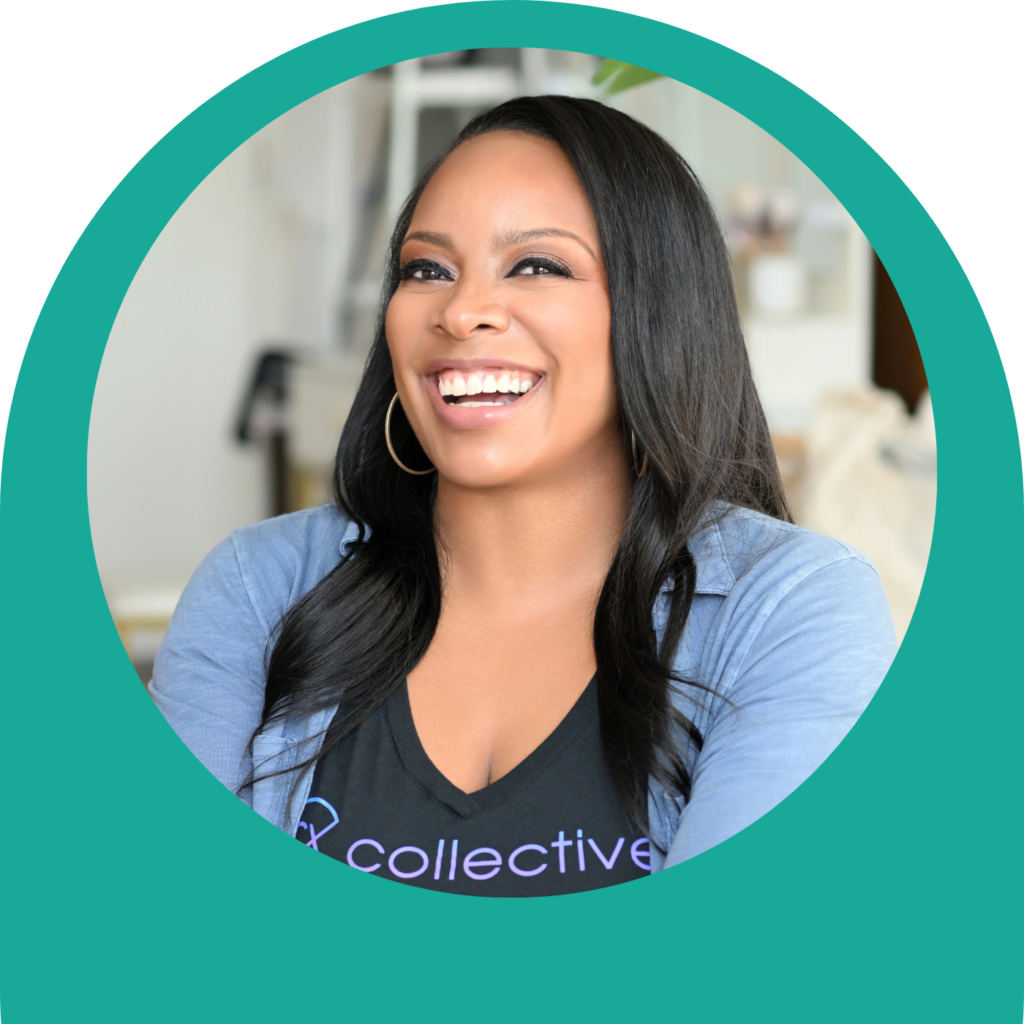
Priscilla McKinney: I’m so lucky to get to be at different conferences around the world. And once again, I bumped into an amazing colleague. We’ve had a couple of conversations since then, but thank you to Viv over at Question Pro for helping Thomas and I meet. So let me tell you about my guest today. I have Thomas Wieberneit.
He’s here and gonna give you some real expertise about what he knows from being a very experienced analyst and consultant with all of his experience around the CRM and the CX industry. And today we’re going to really put the screws to him about what he knows about CRMs because when you are trying to digitally transform your team, we know that you’re like, looking at tools and technology, but it’s not just about the tools and technology. It’s about the people surrounding them.
And he has so much experience being able to really manage people, manage the quality of the experience people are going to have and translate business needs into the technology solution. So really understanding the need first and then looking at the CRM. So Thomas, welcome to my podcast.
Thomas Wieberneit: Thank you and once I stop blushing.
Priscilla McKinney: Well, you have almost three decades of experience and I think maybe we could say you might have seen it all in the CRM world.
Thomas Wieberneit: Well, never say never, but I think I’ve seen a lot, but one could say that people are highly creative. Let’s put it like that. So it’s really stopping to season to season to amaze me.
Priscilla McKinney: I love that. I love that. Well, we’re going to get. Yes, yes, I know I have to tell myself all the time stop being surprised when you go in and do some consulting for a team. Just keep keep a real blank look on your face because you’re otherwise otherwise you might betray what you’re about to about to hear so well.
Thomas Wieberneit: Yeah. But it’s also about the fun of it, right? So if things are always the same, how boring would that be? And that’s one of the good things of this industry, actually.
Priscilla McKinney: That’s totally true. And it’s, it’s because people are still in the mix, Thomas. Okay. Let’s talk about the real pressing problem. CRMs you and I both know become these boring systems of record and they don’t become real engagement tools. This is the crux of the reason I wanted to have you on this podcast. So let’s start there because I know a lot of my audience is already going, so true.
I don’t want to talk about my CRM. Doesn’t work. It’s supposed to do this. It’s like all these promises about the CRM tool. And a lot of people are in a lot of pain about it. So explain to me the distinction of what you think it means for it to be a system of record as opposed to a real engagement tool and why understanding that difference matters.
Thomas Wieberneit: Yes, it’s true, they have been relegated to become systems of record. is partly because of people like me and vendors. Well, I have a vendor history, call me guilty here. The systems need to do something. Technology originally wasn’t as far.
And all of the sudden, when a software vendor starts to implement software to fulfill an idea, it becomes a system and no more strategy. And this is where actually the crux of the matter is. We turned it industry wide from CRM, from strategy to system. And now technology is as it is. So you start with restoring it.
And over time you lose track. You confuse the map with the landscape that the map shall actually describe and be an accurate description of. And then things heap up and heap up and all of the sudden you have a humongously big system and a good number of customers and have a hard time changing the system to follow needs without disrupting your customers.
And that brings on a lot of other vendors who jump into that niche and engage. And that way, social CRM, systems of engagement, engagement management, customer experience management, customer data platforms. We put the systems that actually should do something, namely help people, organizations manage and optimize relationships, which is something to do, not to store. Relegate that to, well, a system of record, a dumb database.
Priscilla McKinney: And this dumb database has so much promise though, because you know, we all want to digitally transform our teams and put these tools in front of them to say, don’t forget to call so-and-so. Okay. Well, we can make that dumb CRM tell you call so-and-so, but then how do we use that? So this is, this is the crux.
So you walk in often when you’re doing consulting work, and the CRM implementation has failed, utterly failed. So tell me why, like what’s the typical thing you’re walking into?
Thomas Wieberneit: There are bunches of things. So one is that they are not used for what they are actually supposed to do. They have become management systems. this is actually, or systems for the management, not management systems. This is a failure actually that is often not inside the system, but this is something that is wrong at the outset of the project. Of course.
The ones who buy the system are not necessarily the ones who use the system. Actually, normally they are not. And the ones who by the system are often more aligned to the managers of the ones who use the system. And then the managers, what does a manager want to have?
We have seen it post-COVID again, people want to have control about their teams. And this means that the thought of enabling the team becomes secondary. And this is one of the core challenges that vendors do, that buyers do, that implementation partners do. So there is not enough focus on actually helping the teams engage by taking away the work, the mundane administrative work. The good news is the technology is now there, really there.
Priscilla McKinney: Well, I want to back up just a little bit and you know, bring up one thing you said at the beginning about how it moved from being strategic and then all of a sudden it’s into process and you brought up a kind of an idea of a mental model and I talk about this. I have a podcast about it. I have a download about it, but I find some of these mental models to be helpful to understand kind of how to unwind the problems that we’ve created.
And you brought one up and it’s called the map is not the territory, right? So don’t confuse the map for the real location, for what’s really going on. And so I’ll put a link in my show notes if anybody kind of wants to understand that theoretical problem and understand why we keep getting ourselves into this CRM problem where it sounds really good in theory and then we implement it horribly. That would be really helpful.
But I think this is the crux of why I wanna talk with you is that you’re walking in and these things haven’t been implemented. The right people, as you say, were not in the room, they’ve not been consulted, they’re not being given the training. And so it’s kind of like that next step as soon as it hits open air or is given to the team, everybody just abandons the cause. So tell us a little bit about the most common mistakes you’re seeing. Why, why these things are failing that go beyond just the, okay, you put it in without much thought. Yes, we know that they put it in without much thought, but what specifically?
Thomas Wieberneit: Most common ones are actually two. So one is, you mentioned it, the ones who actually shall use the system and shall benefit of the system are often not at the table. They are not even asked. So, well, then I’m a German, so we have three basic office rules. One is never done it like that, will never do it like this, and how dare you. So there’s a lack of change management.
Then, yeah, helping people and showing people that this is actually for them and helping them do their job better, have a better day in life. This is one. The other one is probably related to it. Often systems are used as a silver bullet. So I’m coming in there. So our system sucks. It really sucks. This is what I hear. So I need another one.
Because this one clearly sucks. Why does it sucks? Nobody uses this, nobody does this, that, they all hate it. Why do they hate it? Because of the other reason. So the error that management or buyers often does and follows is, well, another system helps me getting out of there. It’s a silver bullet.
This is the root failure or the root consequence of the failure of treating CRM strategically. It has become a system. So doesn’t work, take another system. But guess what? If you do the same thing, put more lipstick on the same pig, it’s still a pig, right? Yeah? Yeah? Yeah?
Priscilla McKinney: Right, right. And then, and also all the people, we took all of us with us. We showed up to this new system and we still don’t have that change management in place. And I don’t want to get ahead of myself here, but one of the issues is not just implementing the CRM, but it’s also over time optimizing it.
And so what you’re saying is that people failed to really, you know, grab hold of it at the beginning. And for people to continue to use it, there has to be some kind of continual improvement legislation really coming down from leadership. And so that particular one that quote unquote sucks was not only not implemented correctly, but there was no plan to optimize it even if it had, you know, you know, taken hold.
Thomas Wieberneit: Right. Yeah, and if so, it often gets optimized along the wrong KPIs. again, so who is it not implemented for? The people in the field, the marketer, the salesperson, the service person. Who is it implemented for? The service manager, the sales manager, the head of marketing. That means that the well, the analysis and the KPIs and the dashboards get better and better, but the project support, the work support for the people does not.
And this is where my offering, quote unquote, unsuck your CRM or unleash your CRM to put it formally, positively can help because we are coming from just from the other angle. So we are asking, why doesn’t it work? and then find out what can be done to make it work for the people.
Priscilla McKinney: I love that. So you basically are saying, I’m going to take your CRM and help you make sure that it actually serves the sales teams, the frontline people. People are using it and need to use it every day as an effective tool and less for just financial reporting and KPIs. Okay. So we get there and there is then this gap of what is on the table. What actually do salespeople need? So let’s pretend for a minute that they’ve hired you, Thomas, and they finally do put the right people in the room and the salespeople are there.
Do you find that they actually can communicate very well what they need or is that also a process of getting them to explain what kind of a tool they would need day in and day out?
Thomas Wieberneit: Well, we are all humans. Some of us are better communicating than others. But it’s often quite clear. So what shall they achieve? What do they hate? What do we all hate is administration, right? After a long day, fill in data into some very cumbersome systems with lots of mandatory fields and other stuff that just takes more time.
So the secret sauce, if you want to formulate it like that is answering the questions, where can I take cumbersome work away from the people and automate that stuff so that they can do more of what they actually are supposed to do and in all likelihood also want to do, talk with customers, be with customers, sell more, market more that they can’t do if they need to fill in reports.
So the basic question is, how do I take that away from them? And that will not go in one shot. It’s a gradual effort. It might even need replacement of the system because the system might be totally burned. Then you really need to go somewhere else. But in all likelihood, you have a great system. Just help your Polish to help your people.
Priscilla McKinney: Right, right. Okay. Let’s get kind of nitty gritty because you and I talked, last time in Austin and I mentioned that I was a HubSpot platinum shop and I think I got an eye roll from you. So, let’s just stop there for a minute. And I, I am agnostic. I often tell clients, I don’t bleed orange. I’m here to serve my clients, not to serve HubSpot. but I know that you don’t particularly like that system, but I also know you are agnostic to systems.
You’re just wanting people to truly implement them properly. But tell me kind of a little bit of behind the scenes, what systems do you like and what do you not like? Kind of what’s your approach? How do you talk about that?
Thomas Wieberneit: I try to cut through the hype that is there. HubSpot is good at inbound marketing. It’s great at inbound marketing, actually. At customer service, not so. Although they have a customer service module. Same with sales. They have a sales module, which is probably better than their service module, but heck, there are far better systems for sales processes than a HubSpot. I couldn’t now I don’t name names.
And I don’t want to blast on upspot here. So they’re set for where they are coming from. And given that their sales and service functionalities are fairly young, one needs to admit that as well. So they can’t be as good as some software. No, let’s name one, Sugar. Their marketing is inferior to upspots. But their sales processes, especially when it comes to manufacturing industry processes, is far superior for TopSpot, will be able to deliver in the next years.
Priscilla McKinney: I love what you’re saying here and I think this is why people tune into this podcast is to say just because some other colleague of yours swears by a particular CRM, it doesn’t mean it’s good for what you’re trying to accomplish. And I think that’s a really good point. HubSpot started as an inbound service, right? And so of course they’re really good at that.
These other things where I was on a call the other day where they’re implementing, you know, invoicing and paying directly to your quote, these are all new services. Of course they want us to use it because they want us to try it out and perfect it for them, but I don’t want to be a guinea pig. And I don’t want my clients to be guinea pigs for this.
And so I do think you need to have a really sound conversation about what are you trying to do? And this is where people like Thomas come in so handy is to say, keep us agnostic and let us tell you what we need to accomplish, what industry we’re in, what approach we take to service, to sales, you know, and help find if you are going to make that switch, help find the right one.
But back to Thomas’s point, if you have one and just haven’t given it its all, then just reset and get the right people in the room and start, you know, from there. think just like the best kind of workout, you know, for any human body is the kind of workout you will do. The best CRM is the one you will work at the most. And of course, know there’s there’s going to be fine points when people just can’t make a certain one work in an industry but I love this approach and your expertise to say let’s just really start with what’s most important which is what are you trying to accomplish.
Thomas Wieberneit: Yeah, that’s the starting point. don’t, that’s one of the mistakes that I just said. System is a silver bullet, so just pick a system and build from there. look at what you want to accomplish and then choose a system that helps you getting there.
Priscilla McKinney: Yeah. Yeah. Tell me a little bit about a very messy subject. I really want to see how far we go into this and maybe we stay surface, but I want to end on kind of a big doozy for you Thomas, since I have such a seasoned expert on the podcast and that is I’d love your thinking around the emergence of agentic AI and these large language models. What is happening in the technology world related to CRMs because of this emergence.
Thomas Wieberneit: Well, look at a company, a big company that probably should name or should get renamed. So we created a humongous hype. This is even more than Bitcoin, blockchain and metaverse combined. So LLMs and agents are on the verge of really falling off a precipice. And that fall has the risk of being long and getting a very hard landing.
If not, vendors and buyers, both parties, well, and pundits like me as well, look more into what’s the value. Where do those things, agents, help and where don’t they help and in how far do they help? So there are often automation crazes going on that basically end up, if you sum them up, do the same automation as you did before, just use a technology that is first, far less predictable, and an LLM by definition is not predictive, and second, uses far more resources than the existing technology will do in years.
So there we need to get more into an outcome, a value discussion and find the boundaries where the new technology really helps adding value versus where it doesn’t. And there’s a big gray zone. I guarantee you that there’s a big gray zone and there needs to be experimentation, but we need to look at outcome oriented KPIs at the end to make sure that we are building something, that we are implementing something, that is actually of help.
Priscilla McKinney: Can you put a little bit more flesh on the bone of this conversation? Like give me a real world example of how people are trying to use these AI agents and you know companies that are already incorporating LLMs into their CRM and what kinds of problems they’re having.
Thomas Wieberneit: See, where they are typically working fairly well or pretty well is if you have a good structured knowledge base and service scenarios. The if is the knowledge base, right? So you train them well and they can give you very good answers. What does this do? It helps your service team to become better themselves, to not get bogged down with the 34th question of heck, why don’t I find the off switch on my MacBook?
But go down into more serious things. Why is my screen flickering? What can I do against that? Or look at companies like Siemens. They implemented an LLM-based helper tool that helps their clients get answers faster and currently as accurate in some areas, in the chosen areas, as accurate as a service person normally does for fairly simple scenarios.
That helps Siemens as well as the service people to be prepared for the ones that, and it has a good handoff process as well, by the way. That helps the service personnel to be better prepared, get deeper into it and provide better service to their customers as well. So that works. Where it doesn’t work so well, I hate those draft me an email scenarios. So they are looking, create me a campaign scenarios. They are on the outset, they are nice, but so far they are not adding much value. They are looking sexy as heck.
But the real value is somewhere else. A good value in a marketing scenario, as I’d say, is the creation of segmentations, actually.
Priscilla McKinney: Well, I like that example of Siemens because, you know, if you are having a technical problem with a product, it’s actually often quicker to get a solid answer from a chatbot, let’s say. And I love that idea of let the chatbot handle some of the more basic functions that someone can get quickly. And then that way the escalated very complex problems can be reserved for their human intervention. I love that idea. But yeah.
Thomas Wieberneit: And. One caveat is don’t keep it too simple. There should be, let’s say, reasonable complexity to it because running those scenarios already is not cheap in itself. And the value that comes from it is if the longer service conversations, I just would have said sales conversations, the longer service conversations are the ones that eat up most into the budget of a service department.
So if this can get quote unquote deflected, handled by a smart entity that also is less prone to have a bad mood, then it’s good for the company because it’s good for the customer. And this is the main thinking that they need to apply. So the benefit for me as a business is because it’s good for the client.
Priscilla McKinney: Right. And when I’m trying to get help with a particular product, I’m not looking to build a relationship, but more to your point on the other side, when I’m doing sales, I am trying to build a relationship. And so these AI bots that try and write my emails for me or write my marketing messages or build a campaign for me, it’s just like, my gosh, it’s not the tone of voice. And I know a lot of people say you can train it to do tone of voice. And we certainly add a lot and create, you know, a lot of prompts with tone of voice, you know, to get a better result.
But it does not substitute that relationship. And I think it’s kind of coming back from what you talked about, like understand what you’re trying to achieve. If the goal in that moment processing through your CRM is to satisfy an actual service need that is in large part technical, then let the technical piece handle it. But if it is a relationship building moment, then we need those relationship elements in there.
Thomas Wieberneit: then so far it’s probably better to have the person handle it. Having said that, if you’re in an ABM scenario, account-based marketing scenario, there are some agent-based solutions or are emerging that are basically in real time building the web page that Thomas needs based upon recent interaction, which is a page that is very different to what Priscilla gets.
And that done in real time and based upon the different stages that we are in our buying journey at this point in time. this can be, well, it’s relationship building, part one, because I get something and you get something that is relevant to us in the moment. And it’s very, well, because it’s personalized and relevant at the moment. And it’s efficient for the team based upon the content that is already there in the CMS.
Priscilla McKinney: Right and I find at those moments. It’s actually really beautiful because it’s amplifying Really good strategy and really good relationship moments. I love the technology to amplify it But to your point at the very beginning we got to start with that strategy first and make sure that we are staying true to it while we begin to implement and create those processes so as a parting thought I wonder what you might say to people who are very frustrated right now with their CRM and thinking that they should go find quote unquote that next silver bullet, which as you point out does not exist.
So what’s a word of wisdom you could provide? And of course, as a thank you Thomas for coming on the show, if you are in the market for some consulting, because this is just such a pain point for you. Please, call Thomas. He’s not paid me to say that. This is my show. But we try and bring really great expertise so that you can take the next great step in digital transformation. But Thomas, what would you say to somebody who’s really in a lot of pain right now about that?
Thomas Wieberneit: Well, the pain is usually, one needs to differentiate, the pain is usually with the teams and it is fairly less, no, it’s not very data driven by the management teams. So if you have the feeling that there is a big pain in your organization, start from there and get into a data driven process to improve this pain. This is the word of wisdom.
Basically it’s step back, breathe, have a look and get some details. Now it’s often that team members don’t bitch with their managers so basically they don’t tell you what’s really wrong but they will tell an outsider. So the advice is build a structured process or help build a structured process that identifies what the pain points in the teams have and build a roadmap from there to improve it.
Priscilla McKinney: I love it. Okay, you can connect with Thomas if one of my friends becomes your friends Find him on linkedin and you can make a new friend and Perhaps ask him a few more questions about his expertise, but thomas Thank you so much for coming on here and talking with me a little bit about my world and CRMs and especially account-based marketing.
I love talking about that. But it’s nice to talk to another implementer and get to have that strategic thought first before we just dive into pulling technology into companies.
Thomas Wieberneit: Yeah, well thanks for having me. It’s always a pleasure talking to you, with or without a camera in between.
Priscilla McKinney: I love it. I love it. So if you’re taking that next step in digital transformation, we hope we can continue to help you. If you’ve liked this podcast, please go tell a friend about it. And as always, make sure that you connect with my guests. Thanks so much for listening.
Thomas Wieberneit: again and hope you guys enjoyed as well