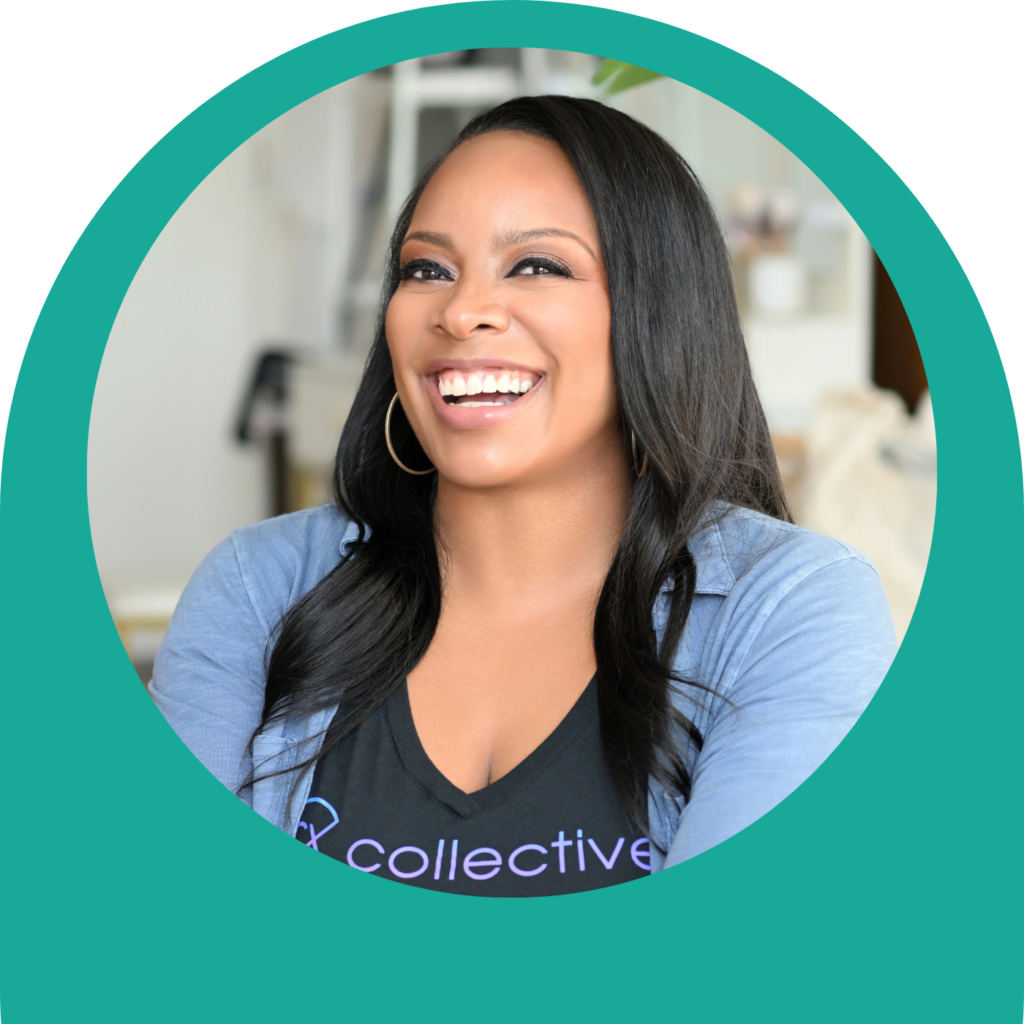
Priscilla McKinney: As always on this podcast, find some of the best people out there doing the work. You’re going to love my guest today. Ty Givens, she’s the founder of CX Collective and she is a trusted partner to brands that want their customer experience to be that competitive advantage, right? And she is really known for turning messy operations into scalable, human-centered programs that actually drive these little things that we are all after, is loyalty and growth.
So Ty, welcome to the show.
Ty Givens: Thank you so much for having me. I’m really glad to be here.
Priscilla McKinney: Love it. We’re going to dive into your expertise. Everybody is being asked to, you know, what is going on with our customers? What are they feeling? What are they, you know, where are our bottlenecks? Where could we improve? Nobody walks into a meeting anymore without stakeholders asking these things.
But tell me what the current state of CX leadership is right now. Are they feeling good? Are they feeling pressed? What’s going on?
Ty Givens: So, you know, okay, so I’ve been in this space for the last 25 plus years. I literally started 18 years old in support. Back then, leadership was really about the people first. So it was about being available to guide and help and mentor people.
Midway through, it shifted when we kind of had that Silicon, you call it Silicon Beach here in LA, where it was a boom of all these startups that were like really doing well. And the leadership for support needed to shift from being so focused on people to being more focused on technology and operations. And now we’re in a world where even that skill set is mostly outdated because now support leaders are expected to know how to leverage, implement, maintain AI tools.
And AI sounds, you know, for most people who don’t know anything about it, really easy to use. But when you start to use it, you realize like, yes, it makes me much more efficient, but darn, I really got to know what I’m talking about because otherwise, who knows what will come out of this.
Priscilla McKinney: Mm-hmm. Yeah, it’s like so ubiquitous anymore, but it’s kind of thrown at everybody like use AI to figure it out. Well, okay how?
Ty Givens: Then how do you know if what AI has given you is right or wrong? So that’s one of the other things that I see a lot of is, I mean, for me, one of my opportunities is I’m not a great marketer, I’m not a great salesperson. And I admit that all day long.
So I will use AI to help me with those things. And then if, you know, I’m following it to the T, I’m like, why isn’t it working? And it’s because there’s no expert there to say, yeah, that’s a good idea, but this might be a little different for your business. I don’t have that nuance.
And so I think that, you know, yes, it is useful, it’s helpful and it gets me thinking about things in a different way but I don’t think it fully beats out experience.
Priscilla McKinney: Right, right. I love that. Okay. So let’s talk about your real world. You know, how, when people come to you, I imagine they’re in some kind of a customer experience problem. So how do you get them to move from that kind of firefighting mentality into some strategic leadership? What does that look like?
Ty Givens: You have to talk money. Honestly, you have to talk money because at the end of the day if I tell a leader let me set you up on a system or set of tools that will automate responses for you, will answer the low-hanging fruit questions and will only filter through the things that a human really needs to handle, what they’ll probably say is that sounds good but I don’t necessarily need to spend the money on doing something like that because you know, my niece is my admin and she’s you know I’m only paying her X dollars an hour and she’s handling things pretty quickly.
But if I were to reframe that and say you have an opportunity of let’s say you’re missing 50 contacts per month which doesn’t sound like a ton depending on the size of the business but of those 50 if those are leads valued at $100 that’s money on the table that we’re literally walking away from that could be handled by someone who can do it so that your niece who’s actually building repetitive questions could be focusing on things that would bring you revenue, is it worth it for you? That five K, is that worth it?
And the reality is that in that case they’re like, yes, I get that. So in order to remove them from thinking of being very tactical I have to kind of shift them into thinking about how it’s going to impact the bottom line and then that’s when strategic thinking comes in. That’s when they want to approach the fire otherwise they’ll go right through it.
Priscilla McKinney: I love that. Yeah. Right, right. So tell me the truth about, you know, when you talk with people, are they already struggling? Are they inheriting messy systems? Do they have limited resources? You know, like what’s the reality when you’re starting to have this consumer and customer experience conversation?
Ty Givens: All three. So we work with startups. With startups, typically they’re trying to, they’re funded most of the time. So they’re trying to start out so that they can scale. The process is typically like, if you don’t think about this strategically, the processes will break down. Even if you add a second person, if you add, you know, four more people, nine more people, you go from a team of one to 10, the way that you’re working as one is totally different than the way you work as 10.
So for them, they’ve come in because they want a foundation that is scalable. And you have companies that have been around for a long time and they are hearing about all of the new technology. Well, I used to work inside of companies too. And so when I did, I was an expert on those tools and those processes, but I wasn’t as aware of what was going on in the world around me.
And so those companies will tend to come to us because they’re like, we need to modernize. We’re hearing all this buzz about AI. What does that mean? What should we be doing to take advantage of that? So we’ll find that our clients run the gamut. The ones that stick with us the longest are the ones who’ve been around for a longer amount of time. They need less time from us during the engagement, but they need more time from us over extended periods of time because their change is like turning a cruise ship, not a speedboat. So a startup is like a speedboat. You can just get it going. They’re going to be good. But a larger business is going to take a while.
Priscilla McKinney: Yeah, so what are the common customer experience problems people are having? What are they talking about?
Ty Givens: Missed opportunities. So I can’t keep up with the volume of requests that I’m receiving. I’m getting a bunch of requests and they’re pretty much all around the same thing. I’ve launched AI but it’s hallucinating, it’s giving false information or bad answers.
I just added someone to staff and now it feels like we’re two different companies because the team members don’t speak to each other the same way. It could be we’ve launched a help desk like a Zendesk or Gorgeous or Intercom and it’s running but we’re not seeing any efficiency from it and we don’t know why. So we have different opportunities within our client base depending on where they are.
Because a lot of times when you buy like a new tool, the tool is marketed to you as like a quick win ROI, set it up, you’re good to go. But the reality is that the tool has to be maintained, it has to be monitored, your processes have to be clean before it goes in there. If you’re trying to launch AI, you gotta have really clean, solid processes. So there’s all these things that you have to have before you do the next thing and people don’t even know about that.
Priscilla McKinney: Hmm, right, right. So there’s some reliance on the tool thinking the tool is going to solve it. But the reality is it’s a human problem to begin with and so then you still need the humans to solve it.
Ty Givens: Still need the human because if you don’t know, I’ve seen people come to us and say hey we launched AI and it’s not working and then I’m like let me see your knowledge base and they’re like we didn’t set one up.
Well, that has to be the source of truth. You’d be surprised. But when you think about it, because you probably live in a world where you are seeing these tools being introduced, you have a different understanding. Imagine someone who’s just being told that AI is the way of the future and is going to just change everything for them. They fully believe that, and they think it’s just a flip of a switch. And it’s like, nope. You got to maintain.
Priscilla McKinney: No. Mm-hmm. Yeah. Okay, so let’s put that person, they’re at a company, they’re being asked to improve the customer experience, and they feel like they’re drowning in support tickets and complaints. Probably not peddling a lot of strong reviews, five-star reviews or anything like that. They’re probably dealing with all the problems.
And to them, it feels like chaos. So where do you start with them to help them get out of that chaos and start building a real system that can use the digital tools to transform their work?
Ty Givens: The first thing I want to know is the top five contact drivers. Now, not everyone is tracking those, so if they are not tracking them, then we have to help them do that. But if they are tracking them and they just don’t know what to do, it’s like, what are the top five reasons that people are contacting you?
The next thing we want to do is determine if those contact reasons are things that we can have set up for self-serve or if it has to be agent assisted. Agent assisted means like no matter what, it has to go to a person. And then the next thing, if it’s self-serve, we want to build the infrastructure around being able to help people help themselves. And it doesn’t mean that you don’t want them, people are just like, I want to talk to a person, that’s fine.
But the idea is that for the people who don’t really want to talk to a person and just want to get their answers done, let them go that route. And then we start with those top five. We look for the easiest low hanging fruit and then we build from there. Another common mistake that people make when they roll out AI is that they try to boil the ocean and automate really big workflows. But the reality is the best way to do it is to start small.
The results are 26% are being handled through automation and then their CSAT has actually grown two points since we launched. So the customers are happier overall because they can get things done faster and then the ones who want to talk to someone they can get to someone as well during business hours. So we try to leave outs and openings for everybody to get what they need.
Priscilla McKinney: Well, tell me a little bit about that, you know, CSAT. And really, where does this figure into the conversation? Also, we really try and leave behind jargon. So in this show, just if you don’t know what that is, it’s customer satisfaction. It’s a kind of a standard that companies use across the board to gather, you know, to measure how customers are feeling about them. But what’s the kind of conversation you have with teams about that number?
Ty Givens: So the idea is that obviously you want it to be as high as possible. But the reality is that customer satisfaction measures the experience that the customer has with the person, because it depends on what you call your team members, but the person in your company at that moment. And there’s a separate metric on net promoter score or NPS that measures the overall experience.
And then there’s customer effort score or CES that talks about how easy was it for you to do this thing or whatever that is. So you have these three metrics. CES or customer effort score ties more closely to AI. CSAT ties more closely to agent engagement. NPS ties more closely to the overall experience.
So as we’re working through what those metrics mean, one of the challenges that we find a lot with customer satisfaction is that the customer is not dissatisfied with the agent. The customer is dissatisfied with the outcome. And the outcome is probably in line with your policy. So I wanted a refund. They didn’t give me a refund, but Ty was really nice. I liked talking to her, but she said no. So I’m dissatisfied. Right?
Priscilla McKinney: Right. Right. I always, you know, just as a human, as a consumer, I hate that you have a wonderful person who helps you on the line. But the company is the thing that is, you know, in certain cases, being the big jerk, you know, and you hate like whenever I get those surveys, then after I’m like, yeah, they’re great. But there are a few companies that don’t let you distinguish between the satisfaction you got from the help from the actual issue. And that kind of dumb surveying really drives me crazy. I hate that.
Ty Givens: Yeah. We’re getting ready to start partnering with a company that is really focused on being able to differentiate the scores or the ways in which scores are captured so that the business can actually get down to the root cause and tie it back to revenue. Because at the end of the day, no business is around for no reason. We’re always here to earn the money.
And yes, this experience matters a lot. But you know, the higher up you get in these different companies, it really comes down to the impact of revenue and retention when we do these things. So you need to have that story ready and customer satisfaction helps you with that.
Priscilla McKinney: I love that. I love that. Well, Ty, just as a thank you for being on our show and helping people figure out what they do next. Please give me one last thought. Like if someone is sitting there, they’re being tasked with this, where’s their first go to? Obviously I’d love for them to connect with you. It’s Ty Givens and it’s T-Y G-I-V-E-N-S, very easy to find her, obviously she’s very approachable. But what is the first question they should be asking themselves so that they’re ready to talk with an expert like you?
Ty Givens: What do my customers expect of me? That’s the first question. I think that what we find a lot is that we have these ideas in our mind of what the customer expects, and we start operating based on what we think they expect instead of figuring out what it is that they really do expect.
And if you start from that, because I have a green belt in Six Sigma, I did this a few years ago, and Six Sigma is all about centering your business and your work around the customer experience. So if you’re doing any work that your customer doesn’t expect you to do, it’s wasted time, it’s a waste of resources.
So the first question is what does my customer expect of me? The next question you’re going to ask yourself is what am I doing today in support of that? The next question is what should I be doing? And sometimes that what should I be doing you may be limited because you don’t know what’s available out there for you to do that, and that’s when you talk to somebody who does know.
Priscilla McKinney: I love it. I love it. Ty, thank you so much for your time. I hope people do reach out to you, but as always, we’re looking for giving just a tip and a clue about what is your next step so you can have some digital transformation success. Thanks so much.
Ty Givens: Thank you for having me.